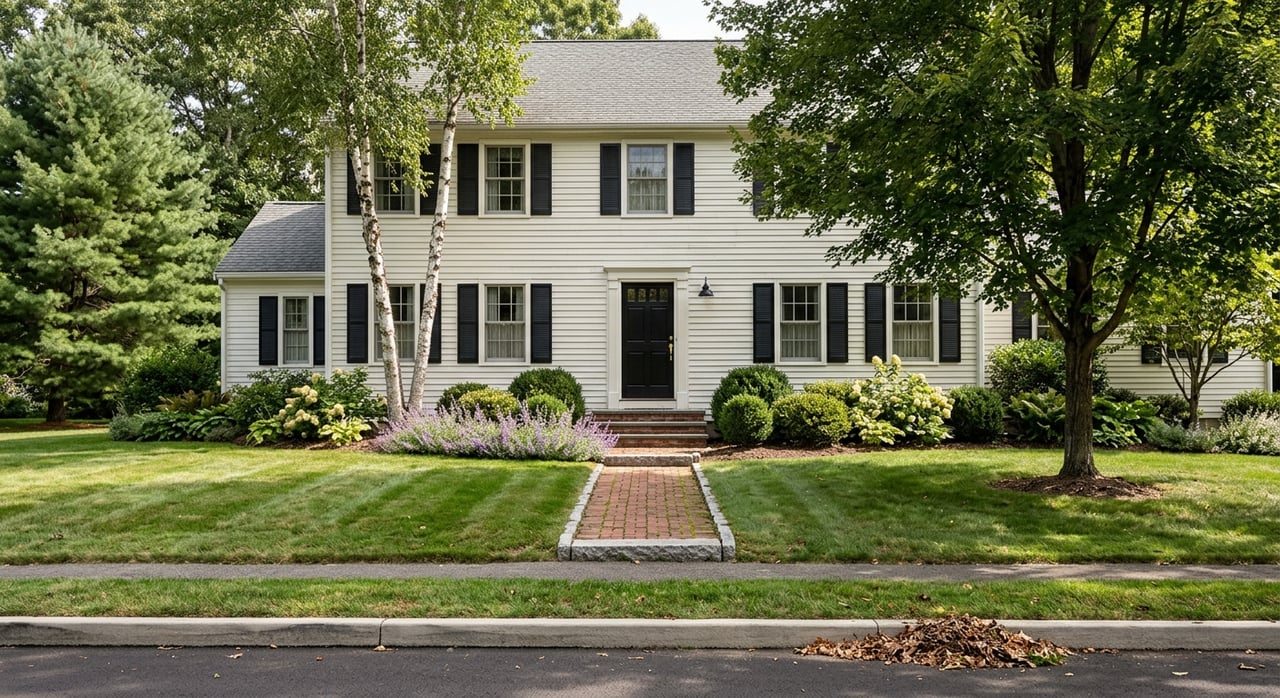
Wondering whether Amherst feels lively all year or only when school is in session? If you are thinking about moving here, that is a smart question. Amherst has a distinct rhythm that blends college-town energy, village-center convenience, and real access to open space, and understanding that mix can help you decide whether it fits your daily life. Let’s take a closer look.
Amherst has a true year-round identity
Amherst is home to about 40,920 residents, with roughly 9,700 households. It is shaped in part by higher education, including UMass Amherst, Hampshire College, and Amherst College, but it is also a functioning town with established neighborhoods, local services, schools, and daily routines that continue well beyond the academic calendar.
That balance is a big part of what year-round living feels like here. You may notice more activity tied to the school year, especially with UMass Amherst enrolling more than 32,000 students, but Amherst is not simply a seasonal campus setting. It is also a place where people own homes, rent apartments, raise children, commute, walk trails, and settle into long-term routines.
The town also works to preserve a small-town feel in its downtown area. That helps explain why Amherst can feel active without feeling oversized, and why many people are drawn to it if they want a place with both energy and familiarity.
Daily life in Amherst
Living in Amherst year-round often means you get a mix of convenience and calm. The center of town feels relatively compact, while the edges of town open into farmland, wooded areas, and protected land. That creates a daily experience that can feel connected and practical without being overly dense.
Amherst also has a traditional village-center pattern rather than a purely suburban layout. Growth is directed toward existing developed centers, and preserved land is distributed so that open space is often a short walk from village centers or the town center. In real life, that can mean errands, walks, and outdoor time all fitting more naturally into your week.
If you are used to places where everything feels spread out, Amherst may feel more layered. Some areas are closer to downtown activity, while others lean more rural in character. That range gives buyers different ways to experience the town depending on what kind of pace they want.
Housing reflects Amherst’s history
One thing that stands out about Amherst is the age and character of its housing stock. About a quarter of the town’s housing units were built before 1940, and historic character is part of the housing story in a very visible way.
The town has nine National Register districts, including Amherst Central Business District, North Amherst Center, South Amherst Common, Cushman Village, East Village, Dickinson, Lincoln-Sunset, Prospect-Gaylord, and Westside. For you as a buyer, that can translate into homes and areas with established character, traditional layouts, and a sense of continuity with the town’s past.
That does not mean every home is historic, but it does mean Amherst is not defined by large areas of brand-new subdivision development. If you are looking for an established New England setting, that is often part of the appeal.
Expect a renter-heavy market
Amherst has a substantial renter presence. Town housing resources show that 56% of households are renter-occupied, and Census data show an owner-occupied housing rate of 44.2%.
That mix shapes the market in practical ways. You are looking at a town where homeownership exists alongside a strong rental market, which is consistent with the influence of the colleges and universities. It can create a different feel from towns where owner-occupancy dominates nearly every neighborhood.
From a cost standpoint, Census data show a median owner-occupied home value of $484,900, median monthly owner costs of $2,783 with a mortgage, and median gross rent of $1,671. Amherst is not a low-cost market, but it does offer a range of housing options for different life stages, from first homes to downsizing moves.
Four real seasons shape the lifestyle
If you live in Amherst year-round, you will experience all four seasons in a meaningful way. NOAA climate normals show an average annual temperature of 48.2°F, with January averaging 23.9°F and July averaging 71.7°F.
Snow is part of the picture too. Amherst averages 36.5 inches of snowfall a year, along with 46.59 inches of annual precipitation. So if you are considering a move here, it helps to be ready for true winter weather as well as a warm and active summer season.
For many people, that seasonal variety is part of the appeal. Your routines, clothing, home maintenance, and outdoor habits will shift through the year, which gives Amherst a very different feel in January than it has in July.
Trails and open space are part of everyday life
Outdoor access is one of Amherst’s strongest year-round features. The Conservation Department manages about 80 miles of trails, and about 30% of the town’s surface area is permanently protected open space.
That protected land includes 1,965 acres of conservation land, 1,842 acres protected by Agricultural Preservation Restrictions, and 157 acres protected by Conservation Restrictions. The result is a landscape that feels like more than just a college town. It also feels tied to farmland, conservation, and the working countryside.
The Norwottuck Rail Trail is another major part of daily life for many residents. Amherst includes a large portion of this 8.5-mile trail, which connects Northampton, Hadley, and Amherst and is used for biking, walking, commuting, rollerblading, and cross-country skiing. If you value outdoor movement built into your regular routine, Amherst offers that in a very practical way.
Schools support year-round community life
For buyers thinking beyond campus influence, local schools are an important part of the picture. Amherst-Pelham Regional and Public Schools serves about 2,500 students on average and reports an 11:1 student-to-teacher ratio.
The district says that three elementary schools are in Amherst, and both the middle school and high school are also in Amherst. The regional system serves Amherst, Pelham, Leverett, and Shutesbury.
This matters because it reinforces that Amherst is not only driven by colleges. It is also a town with a year-round public school community, which adds another layer to how people experience daily life here.
Getting around Amherst
Transit in Amherst is practical and regionally oriented. The town points residents to PVTA for bus service, and UMass Transit operates PVTA bus routes in the Amherst area.
That gives you more car-light options than many small towns, especially when combined with the trail network. At the same time, Amherst is still part of Western Massachusetts, so weather, distance, and your own routine will still play a role in how you get around.
For some residents, that means walking or biking for part of daily life and driving for other needs. The point is not that Amherst functions like a large city, but that it offers more transportation flexibility than many people expect.
Who tends to enjoy Amherst most
Amherst often appeals to buyers who want an established town with academic energy, walkable village centers, and easy access to trails and conserved land. If you like the idea of a place that feels intellectually active but still grounded in New England town patterns, Amherst may feel like a strong fit.
It can also appeal to buyers who want choices in how they live. Some people want to be closer to downtown and campus activity, while others prefer a quieter setting with a more open or rural feel. Amherst’s layout makes room for both experiences.
If you are hoping for a newer, more uniform suburban environment, Amherst may feel different from what you expect. But if you value character, established housing, seasonal change, and a town with both community structure and open space, that year-round mix is exactly what gives Amherst its identity.
If you are exploring Amherst as your next move, having local guidance can make it much easier to match the town’s different areas and housing types to the way you actually want to live. When you are ready to talk through neighborhoods, timing, or your next step, connect with Lauren Robertson.
FAQs
What is daily life like in Amherst, Massachusetts year-round?
- Amherst blends college-town activity with a steady residential routine, including local schools, village centers, trails, open space, and established neighborhoods that stay active throughout the year.
Does Amherst, Massachusetts feel like only a college town?
- No. Colleges are a major part of Amherst, but the town also has a year-round population, public schools, owner-occupied homes, rentals, and daily community life beyond the academic calendar.
What kind of housing can you expect in Amherst, Massachusetts?
- Amherst has a mix of housing types, with many older homes, a strong rental market, and visible historic character in several National Register districts.
What are Amherst, Massachusetts winters like?
- Amherst has real winter weather, with January averaging 23.9°F and average annual snowfall of 36.5 inches, according to NOAA climate normals.
Is Amherst, Massachusetts good for outdoor living?
- Amherst offers strong outdoor access year-round, including about 80 miles of trails, a large portion of the Norwottuck Rail Trail, and about 30% of the town’s surface area in permanently protected open space.
Is it possible to get around Amherst, Massachusetts without driving everywhere?
- Amherst has PVTA bus service operated in the area by UMass Transit, and the trail network supports biking and walking, although many residents still rely on a car for part of daily life.
